
World of Books
World of BooksBooks & Reference
4.343.00 Reviews
- Version
- 80
- Installs
- 100.00K
- Age Rating
- Everyone
Screenshots

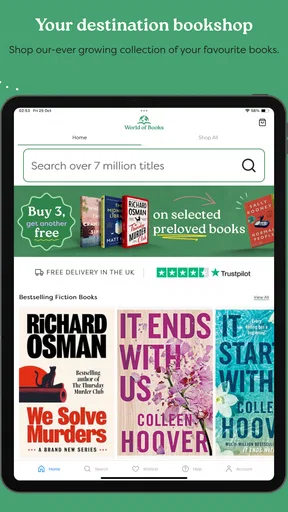
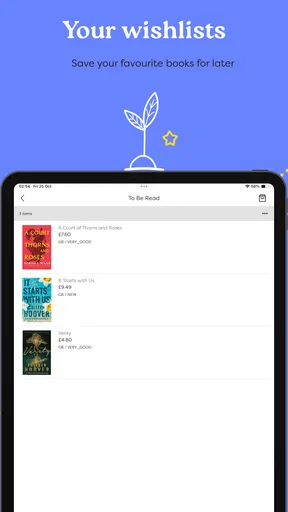
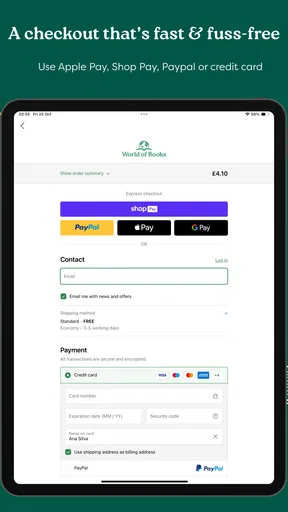
Our Review of World of Books
 Analysis by Appyee
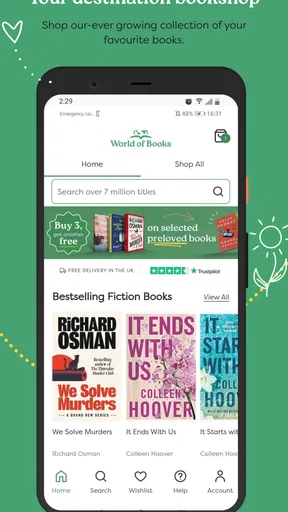
I approached World of Books as a practical reading companion rather than a full digital library. Its purpose is straightforward: help people explore new and used books through a phone, with the convenience of browsing wherever they happen to be. That focus makes it appealing to readers who enjoy physical books, hunt for affordable editions, or want a simpler way to discover something for their next reading session.
The app comes from World of Books, a developer already closely associated with the book-buying experience. It is free to use, aimed at Everyone, and belongs in the Books & Reference category. After spending time with it, my impression is that its value depends less on flashy extras and more on how comfortably it fits into ordinary moments: a quick search before leaving a shop, a browse while commuting, or a calm evening spent comparing possible reads.
There is one important distinction to keep in mind from the start. This is not the same kind of product as an ebook reader, audiobook player, or note-taking library. Its strength is helping you find books, especially when new and used choices matter. If you want to read a digital novel inside the same app, you should look elsewhere. If you want a convenient way to investigate physical titles, it makes considerably more sense.
How the browsing experience feels when you are connected
The most useful parts of the experience naturally depend on a live connection. Searching for a title, moving through book results, and checking the information presented for an edition all require the app to communicate with its service. That is not a criticism unique to this app, but it changes how I use it. I treat it as a connected shopping and reference tool, not something I open expecting a complete experience in airplane mode.
When the connection is stable, the process feels best when I already have a purpose. I might remember a novel mentioned by a friend, look for a particular author, or browse around a subject I have been meaning to study. The app is more useful in those moments than when I am simply hoping for an elaborate recommendation system to entertain me for a long time. Its practical character becomes clear quickly: identify a book, inspect the available opportunity, and decide whether it belongs on my reading list.
Connectivity also affects patience. A strong connection makes short browsing sessions feel natural, while a weak signal can turn a simple search into repeated waiting. I would not blame the app for every delay, because mobile networks vary widely, but it is worth remembering that the experience is tied to the quality of the connection at that moment. If I am underground, in a crowded venue, or moving between coverage areas, I prefer to make my decisions before the connection becomes unreliable.
A useful habit is to search with a specific starting point whenever possible. An exact title, author, or subject gives the app a clearer job than a vague session of tapping through unrelated results. I also find it sensible to pause before leaving a reliable connection if a book is important to me, noting its title and author for later. That small preparation prevents the common mistake of assuming that a page I just viewed will remain available when the network disappears.
What it is like to use the app on the move
World of Books suits mobile situations particularly well because book discovery often happens away from a desk. I can imagine using it in a library aisle to compare a title I have picked up, in a second-hand shop while checking whether an unfamiliar author is worth investigating, or on a lunch break when I want to plan my next physical purchase. The phone format makes those short decisions easier than waiting until I return to a computer.
My favorite mobile use case is the spontaneous one. Suppose I am visiting a charity shop and notice a history book with an interesting cover but no familiar author. Rather than buying immediately, I can use the title as a starting point, inspect what the service presents, and decide whether the book fits what I actually want to read. That workflow is more thoughtful than relying on a cover or a vague memory, especially when shelf space and spending are limited.
The same situation exposes a trade-off. A phone is convenient for quick checks, but it is not always the best screen for prolonged comparison. If I am weighing several books, reading long descriptions, or trying to make a carefully considered order, a larger screen can be more comfortable. I see the mobile app as excellent for discovery and verification in small bursts, while a browser or computer may suit a longer research session better.
It is also worth considering attention. Browsing books on a phone can easily turn into an unfocused scroll, particularly when I begin without a clear subject. I get more from the app when I set a small goal: find a gift for a reader, identify the next book in a series, or locate an affordable replacement for a title I once owned. That approach keeps the connected experience useful instead of letting it become another aimless feed.
New and used books in the same decision
The emphasis on new and used books is what gives this app its clearest identity. For me, used books are not merely a cheaper alternative. They can be a way to find older editions, explore authors without committing to a pristine copy, or build a larger personal collection while keeping costs under control. A service centered on both conditions is therefore more relevant to physical-book readers than an app designed only around digital reading.
Still, buying used requires a different mindset from buying new. I would pay closer attention to the exact edition, the expected physical condition, and whether the format suits my needs before making a decision. A reader seeking a particular cover, translation, binding, or publication version should slow down rather than assuming that every copy of a title is interchangeable. This is one of the most important practical habits I took from using the app: the title alone is not always enough.
New copies, on the other hand, may be the better choice when I am buying a gift, want a cleaner presentation, or need confidence that the book will look untouched. The ability to consider both possibilities in one reading-oriented environment is convenient, but it also means I have to decide what matters most in each purchase. Lowest cost, condition, edition, and gifting suitability do not always point to the same option.
That makes the app especially useful for readers who enjoy making deliberate choices. It is less compelling for someone who always wants the latest pristine release with no interest in alternatives. In that case, a major general retailer or a publisher-focused store may offer a more direct route. World of Books becomes more distinctive when the reader is open to the character and value of second-hand books.
What happens when the connection fails
The most important limitation is also the easiest to overlook: connected browsing is vulnerable to interruptions. If a search does not load, a result page stalls, or the network drops while I am moving between screens, the app cannot offer the same smooth experience as it does under good conditions. I would not plan an entire book-hunting trip around uninterrupted access without a backup approach.
My practical recovery method is simple. I retry once, check whether the problem is limited to the current connection, and avoid repeatedly tapping the same control. If I already know the author or title, I write it down and continue the search later. This is less frustrating than spending several minutes fighting a poor signal, and it protects the main purpose of the app: helping me make a book decision rather than testing my patience.
For an important purchase, I also prefer to complete my checking while connected reliably. That means confirming that I have the right title and edition before I leave the page, rather than assuming I will be able to reconstruct the details later. This is particularly useful when browsing in a physical shop, where the app is supporting my judgment but the book itself is already in my hand.
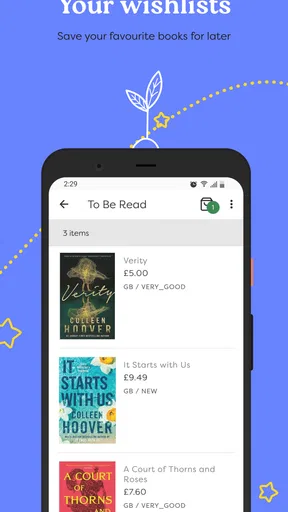
The recovery experience is therefore manageable, but not invisible. A reader who expects every previously viewed detail to remain available without a network may find the app less dependable than a dedicated offline notes system. I would use a notes app alongside it for a personal wishlist, especially if I am collecting titles over several days or visiting places with inconsistent reception.
Using it without wasting mobile data
Because the app is built around online book discovery, data-conscious use is sensible. I tend to browse over Wi-Fi when I am comparing many titles, particularly if I am following several authors or exploring a broad subject. For a quick search on mobile data, I keep the session focused and avoid repeatedly refreshing pages that have already answered my question.
One efficient workflow is to prepare a short list before opening the app. I might note a few authors, subjects, or titles in advance, then search them in one deliberate session. This reduces wandering and makes the app feel faster simply because I am asking it to do less unnecessary work. It also helps me compare books based on a clear purpose instead of being pulled into endless browsing.
Another useful habit is to separate discovery from decision-making. I can use a short connected session to identify possible books, then review my notes later before choosing what I actually want. That prevents repeated searches for the same title and gives me time to consider whether I want new or used, whether the edition matters, and whether the purchase is genuinely worthwhile.
I would not describe this as a replacement for a personal catalog. If I want to track everything I own, record reading progress, store quotations, or maintain detailed tags, a dedicated reading tracker will probably be better. World of Books has a narrower purpose, and I think it works best when I let it remain focused on finding and evaluating physical books rather than expecting it to manage my entire reading life.
Who will get the most from it
I would recommend the app to readers who buy physical books and appreciate having new and used possibilities in one place. It is especially suitable for people who browse second-hand shelves, build a home library gradually, search for older titles, or want a practical tool for checking books before purchasing. The free price also makes it easy to try without treating the installation as a major commitment.
It can be useful for gift shopping as well. If I know that someone enjoys a particular author or subject, I can use a connected browsing session to investigate possible titles before choosing one. The used-book angle may help when I want to assemble a thoughtful gift without automatically paying the highest price, although I would be more careful about condition and presentation when the book is intended for someone else.
Students and lifelong learners may also find value in it when looking for physical reference books or supplementary reading. The app does not replace a library catalog or academic database, but it can support the early stage of deciding which books are worth pursuing. I would still verify that an edition meets a course requirement elsewhere if a specific publication version is important.
On the other hand, I would skip it if my main goal is reading on-screen. An ebook platform, audiobook service, or dedicated digital library app would be a better match. I would also look elsewhere if I need sophisticated reading statistics, annotations, synchronized progress, or a carefully organized personal collection. Those are reasonable expectations for other categories, but they are not the reason I would install this app.
Day-to-day polish and practical expectations
The app has a straightforward identity, which I prefer to a crowded interface that tries to become a social network, reading tracker, retailer, and digital reader all at once. Its usefulness comes from reducing the distance between curiosity and a possible physical book. That simplicity is a strength when I already know what I want to investigate.
At the same time, readers who enjoy deep editorial guidance may find the experience less satisfying than a service built around reviews, community lists, or personalized recommendations. I often use external sources when I want to understand whether a book is well suited to a particular mood or reading level. World of Books can help me locate and assess a purchase opportunity, but it is not the only tool I need for deciding what deserves my attention.
The app has reached over one hundred thousand installs and holds a 4.3 average from more than six hundred ratings, with dozens of written reviews. Those figures suggest that it has found a real audience, though I would still judge it by my own reading habits rather than popularity alone. Its current version is 80, and it runs on Android from version 7.1 onward, which gives it a broad compatibility range for many existing phones.
It was released on August 20, 2025, so I would keep expectations grounded around its central purpose instead of assuming it has the maturity or breadth of every long-established reading platform. The important question is not whether it replaces all other book tools. For me, the question is whether it makes the specific task of finding new and used physical books easier. In that role, it is much easier to appreciate.
My connectivity verdict
World of Books works best when I use it intentionally and while connected to a dependable network. Its mobile format is genuinely useful for quick searches in libraries, shops, commutes, and everyday browsing, but connection loss can interrupt the process. I solve that by keeping a short external wishlist, searching with specific terms, and completing important checks before moving away from reliable coverage.
The strongest reason to try it is the combination of physical-book discovery and new-versus-used choice. That focus separates it from ebook readers and general reading trackers, while its free access makes experimentation easy. The main trade-off is that I must bring my own patience and judgment: the app helps me find possibilities, but I still need to think about edition, condition, purpose, and whether a different book service would suit the task better.
My final recommendation is therefore fairly clear. If you enjoy owning physical books, especially second-hand ones, I think this deserves a place on your phone. Use it as a connected research and shopping companion, not as an offline library or a complete reading-management system. With that expectation, World of Books feels focused, practical, and most valuable in the small real-life moments when a book catches your eye and you want to make a smarter choice.
Verdict
Strengths of World of Books
- Large selection of new and used books across many genres.
- Used books are often priced lower than new retail copies.
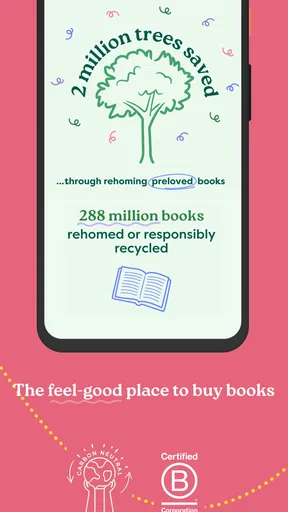
- Supports more sustainable reading through book reuse.
- Book condition is clearly indicated before purchase.
- Convenient delivery options for browsing and ordering from home.
Limitations of World of Books
- Stock availability can change quickly for popular titles.
- Some used copies may show noticeable wear despite condition ratings.
- Delivery times may vary depending on the seller and destination.
- International shipping costs can make small orders less worthwhile.
- The app may offer fewer digital-book options than dedicated ebook stores.
Other Releases by World of Books
View All
Sell books with World of Books
Lifestyle4.2
Similar Picks in This Category
View All
Google Play Books & Audiobooks
Google LLC4.7

네이버 - NAVER
NAVER Corp.3.5

Wattpad - Read & Write Stories
Wattpad.com3.7

King James Bible - Verse+Audio
Ozion4.8

Bible Offline-KJV Holy Bible
Bíblia Offline4.9

Amazon Kindle: Reading App
Amazon Mobile LLC4.8
Frequently Asked Questions
What is World of Books?
World of Books is a shopping platform focused on new and pre-owned books, allowing readers to browse a large catalog across fiction, nonfiction, children’s titles, textbooks, and other categories. Depending on the version and region available, users may be able to search for books, view descriptions and prices, place orders, and manage their purchases from a mobile device or through the service’s website.
Can I buy used books through World of Books?
Yes, World of Books is particularly known for offering second-hand books, although availability may also include new editions and other reading-related products. Used-book condition can vary, so it is important to check the listing details before ordering. Factors such as cover wear, highlighting, notes, dust-jacket condition, and edition information may affect what you receive.
Does World of Books deliver to my country?
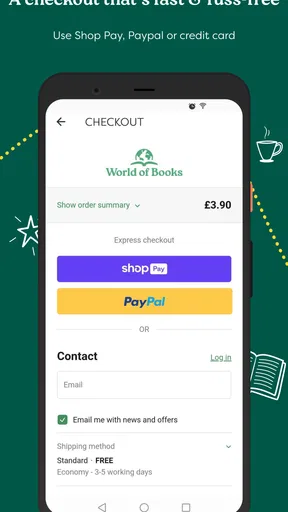
Delivery availability depends on your location, the specific World of Books service you are using, and the item selected. Before completing a purchase, check the shipping information shown at checkout, including delivery charges, estimated arrival times, and any regional restrictions. International orders may also be affected by customs procedures, taxes, or longer delivery periods.
Is World of Books safe to use for shopping?
World of Books is a recognized bookseller, but users should still take normal online-shopping precautions. Download the application only from an official app store, review the developer information, and make sure the payment page uses a secure connection. Before ordering, read the current returns, refund, privacy, and delivery policies, since terms can vary by region.
Can I return a book or request a refund from World of Books?
Return and refund options depend on the condition of the item, the reason for the return, your location, and the current policy applying to your order. If a book arrives damaged, incorrect, or significantly different from its description, contact customer support promptly and keep the packaging until the case is resolved. Always review the applicable return period before purchasing.
